Export Insights
Choosing the Right Potato Variety: The Foundation of Premium Quality Potato Chips
The secret behind every crispy, golden, and delicious potato chip begins long before the frying process—it starts with choosing the right potato variety. For commercial chip manufacturers, the quality of raw potatoes directly influences production efficiency, chip texture, color, oil absorption, and overall customer satisfaction. Not every potato is suitable for chip processing. The ideal chip potato must have high dry matter content, low mois
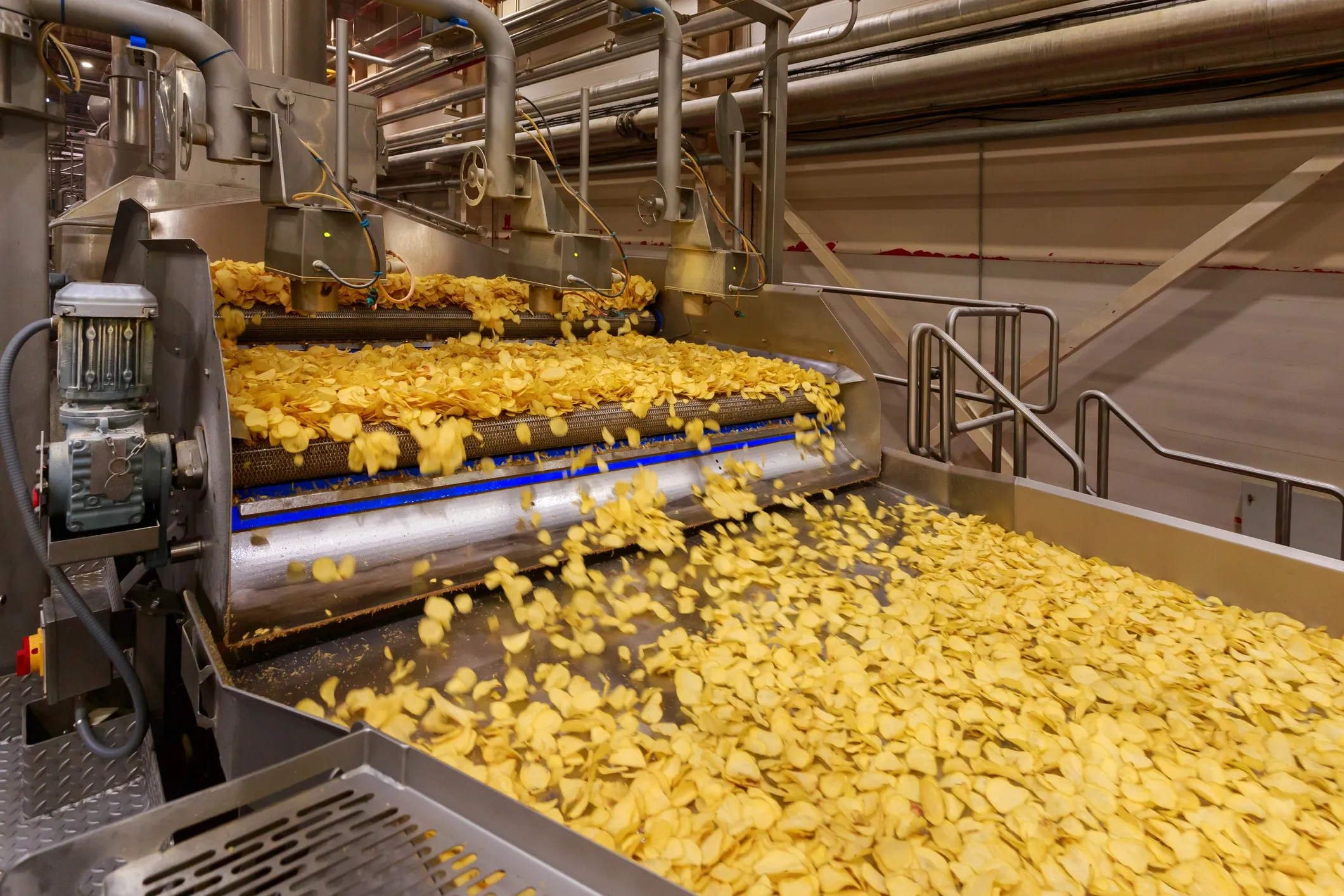
Best Potato Varieties for Chip Manufacturing
The quality of a potato chip begins with the quality of the raw potato.
For commercial chip manufacturers, choosing a suitable processing variety is an important part of production planning. However, variety selection is only one part of the equation. Dry matter, reducing sugar, tuber size, uniformity, storage history and physical condition can all influence processing performance.
Among the varieties used for processing, Lady Rosetta, Russet Burbank and Atlantic are well-known names in different potato-processing markets.
The most suitable variety for a particular manufacturer depends on the production line, growing region, product specification and required processing characteristics.
What Makes a Potato Suitable for Chip Manufacturing?
Potatoes intended for chip production generally need to meet specific quality requirements.
High and Suitable Dry Matter
Dry matter is an important consideration for processing potatoes.
The amount of dry matter can influence:
Chip texture
Crispness
Frying behaviour
Moisture removal
Processing yield
A suitable dry-matter level can contribute to desirable chip texture, although actual results also depend on slice thickness, frying conditions and other processing parameters.
Appropriate Reducing Sugar Level
Reducing sugar is particularly important for potatoes intended for frying.
During frying, reducing sugars participate in browning reactions. Excessive levels can result in darker or unevenly coloured chips.
For this reason, commercial processors may specify an acceptable reducing-sugar range for incoming potatoes.
Storage conditions are also important because reducing-sugar levels can change during storage.
Uniform Size and Shape
Consistent tuber size can help processors maintain more uniform slicing and frying.
A calibrated potato batch can support:
Consistent slice dimensions
More predictable frying
Better production-line handling
Reduced sorting requirements
More consistent finished-product appearance
The preferred size range depends on the manufacturer's slicing equipment and product specification.
Good Physical Quality
Potatoes entering a processing line should generally be assessed for:
Bruising
Cuts
Mechanical damage
Rot
Disease
Sprouting
Green areas
Excessive deformities
Foreign matter
Good physical quality can help reduce trimming, rejection and unnecessary processing losses.
Lady Rosetta Potato for Chip Production
Lady Rosetta, commonly referred to as LR Potato, is a processing-oriented variety widely associated with potato chips and crisps.
It is valued in processing markets for characteristics such as:
Processing suitability
Appropriate dry-matter characteristics
Frying performance
Commercial availability in calibrated grades
Suitability for snack-food applications
However, the quality of Lady Rosetta can vary according to growing conditions, crop maturity and storage history.
For this reason, processors should evaluate the actual batch rather than relying on the variety name alone.
Why Do Chip Manufacturers Consider Lady Rosetta?
When the crop meets the required processing specification, Lady Rosetta can support:
Consistent slicing
Suitable frying performance
Desirable chip texture
Appropriate frying colour
Efficient commercial processing
The actual result depends on the raw-potato specification and the manufacturer's processing conditions.
Russet Burbank for Processing
Russet Burbank is a well-known processing and fresh-market potato variety, particularly associated with North American potato production.
It has historically been used for products including French fries and potato chips.
Its processing performance depends on factors such as:
Growing conditions
Tuber maturity
Dry matter
Reducing sugar
Storage conditions
Storage management is particularly important for processing potatoes because changes in sugar levels can affect frying colour.
Atlantic Potato for Chip Production
Atlantic is another recognized processing variety used in potato-chip production, particularly in North American markets.
It is associated with chip-processing applications and can provide suitable processing characteristics when grown and handled under appropriate conditions.
As with other processing varieties, actual performance should be evaluated based on the crop's:
Dry matter
Reducing sugar
Size
Physical quality
Storage history
Processing test results
Lady Rosetta vs. Russet Burbank vs. Atlantic
Different varieties can be used for chip production, but their suitability depends on the processor's specific requirements.
Factor Lady Rosetta Russet Burbank Atlantic
Processing use Chips and crisps Chips and other processing applications Potato chips
Commercial importance Widely used in processing markets Major processing variety in North America Established chip-processing variety
Dry matter Important processing characteristic Important processing characteristic Important processing characteristic
Reducing sugar Important quality parameter Important quality parameter Important quality parameter
Size uniformity Important for processing Important for processing Important for processing
Storage management Important Important Important
Best choice Depends on buyer specification Depends on buyer specification Depends on buyer specification
There is no universal “best” potato variety for every chip manufacturer. The appropriate choice depends on the manufacturer's equipment, product specification, raw-material availability and local growing conditions.
Why Growing Conditions Matter
A potato variety does not perform independently of its growing environment.
Crop quality can be influenced by:
Temperature
Soil type
Soil drainage
Irrigation
Nutrient management
Seed quality
Crop duration
Weather
Harvest timing
These factors can influence tuber size, dry matter, sugar levels and overall processing quality.
For processors sourcing potatoes from a particular region, understanding the local crop cycle can therefore be as important as selecting the variety itself.
Why Gujarat Is Relevant for Lady Rosetta Potato
Gujarat is an important potato-producing state in India.
The North Gujarat region, including the Deesa and Banaskantha belt, has established commercial potato cultivation and trading activity.
Lady Rosetta is cultivated in Gujarat for processing-related markets, including potato-chip applications.
For buyers sourcing from Gujarat, important procurement considerations include:
Crop season
Available size grades
Quality specifications
Storage status
Quantity
Packing
Delivery schedule
Importance of Post-Harvest Handling
Good field production alone does not guarantee processing quality.
Post-harvest handling can influence the condition of potatoes before they reach the processing plant.
Important practices can include:
Curing
Appropriate post-harvest curing can help strengthen the potato skin and reduce susceptibility to handling damage.
Sorting and Grading
Sorting helps remove potatoes that do not meet the agreed quality specification.
Grading also allows processors to receive a more consistent size range.
Controlled Storage
Storage conditions should be appropriate for the intended processing application.
Poorly managed storage can contribute to:
Sprouting
Moisture loss
Sugar accumulation
Physical deterioration
Careful Transportation
Reducing mechanical damage during loading, unloading and transportation helps maintain the physical quality of the crop.
How Storage Can Affect Chip Quality
Storage is particularly important for processing potatoes.
When potatoes are stored under excessively cold conditions, cold-induced sweetening can increase reducing-sugar levels.
Higher reducing sugars can contribute to darker frying colour.
For this reason, processing potatoes should be stored according to an appropriate storage program based on:
Variety
Intended use
Storage duration
Temperature management
Required frying specification
The appropriate storage program should be determined by the producer, storage operator and processor according to the specific crop.
How the Right Raw Potato Can Support Chip Production
Selecting potatoes that meet the manufacturer's specification can help support:
Consistent frying
Uniform chip colour
Desired texture
Efficient slicing
Reduced rejection and trimming
Predictable processing performance
However, these outcomes depend on the complete production system—not simply on the potato variety.
The processing plant's slicing, washing, drying, frying, cooling and packaging conditions all influence the finished product.
What Should Chip Manufacturers Check Before Buying?
Before purchasing a large quantity of processing potatoes, manufacturers may consider evaluating a representative sample.
Important checks can include:
Variety
Size distribution
Dry matter
Reducing sugar
External appearance
Defect percentage
Sprouting
Disease and rot
Storage history
Actual frying performance
A sample frying test can be particularly useful when the buyer has a specific finished-chip colour and texture requirement.
Choosing a Potato Supplier for Chip Manufacturing
For industrial procurement, buyers should look beyond the variety name.
A reliable purchasing specification can define:
Variety + Size + Dry Matter + Reducing Sugar + Physical Quality + Quantity + Packing + Delivery
This gives both buyer and supplier a clear understanding of the required raw material.
Lady Rosetta Potato Supply from Gujarat
PATEL AGRO SPICES EXPORT supplies Lady Rosetta (LR) Potatoes from Gujarat, India for food processors, potato-chip manufacturers, wholesalers, distributors and international buyers, subject to availability and agreed specifications.
We can discuss requirements for:
Processing-grade Lady Rosetta
Calibrated size grades
Bulk quantities
Commercial packing
Domestic supply
Export shipments
For a commercial enquiry, buyers can provide their required:
Size + Quantity + Quality Specification + Packing + Destination + Delivery Period
This allows the available product to be evaluated against the buyer's requirements.
Conclusion
Choosing a potato for chip manufacturing involves more than selecting a recognized variety.
Lady Rosetta, Russet Burbank and Atlantic are established processing varieties, but their suitability depends on the specific production environment and the quality characteristics of the actual crop.
For commercial chip manufacturers, the most important approach is to evaluate dry matter, reducing sugar, size, uniformity, physical condition, storage history and processing performance against a clearly defined specification.
For buyers sourcing Lady Rosetta from Gujarat, India, careful crop selection, grading, storage and quality evaluation can help create a more consistent raw-material supply.
Looking for Lady Rosetta Potato from Gujarat?
PATEL AGRO SPICES EXPORT supplies Lady Rosetta Potato for potato-chip manufacturers, food processors, wholesalers, distributors and international buyers.
Send us your:
Required Size + Quantity + Quality Specification + Packing + Destination
Our team can discuss current availability and commercial supply requirements.